
Everyday therapy
The app developed by the Berlin-based start-up Kiso Mind helps people with schizophrenia
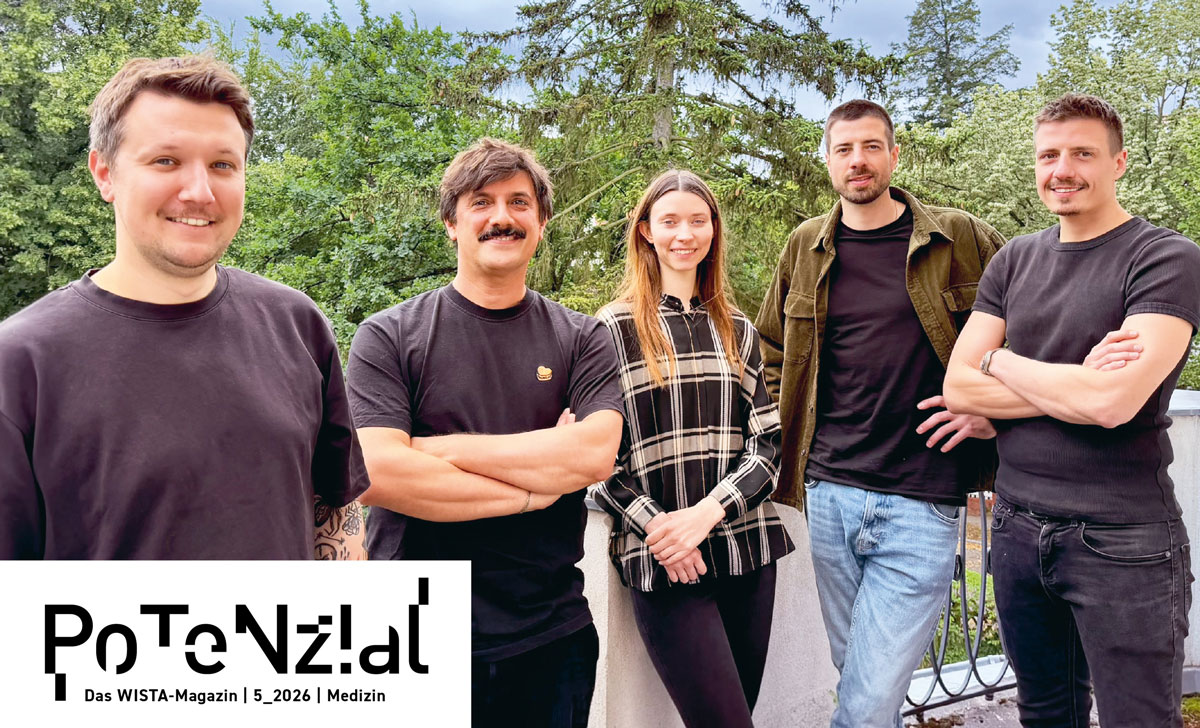
Digital therapies have long been established for depression and anxiety disorders, but hardly for schizophrenia. Kiso Health wants to change that, bringing psychotherapeutic exercises directly into people’s everyday lives through an app.
Schizophrenia is among the most complex mental illnesses. It often progresses in episodes. Delusional beliefs, auditory hallucinations and lack of motivation are among the most common symptoms. Without treatment, social withdrawal is almost inevitable. Around 800,000 people in Germany are affected. Medication can help. In addition, psychotherapy is strongly recommended to help people manage the condition in everyday life. Yet this is often precisely what is lacking.
Only a fraction of those affected actually receive an outpatient therapy place. “Given their symptoms, many people affected simply cannot face calling thirty different therapists,” says Marco Anzaldo. “On top of that, many practitioners are not specialised in schizophrenia. Without psychotherapy, however, the relapse rate is high. That can mean a hospital stay. With each further episode, the chances of a full recovery decline.” This is precisely the gap in care that Kiso Health is addressing.
The heart of the Berlin start-up is Kiso Mind. The smartphone app brings key elements of cognitive behavioural therapy into users’ everyday lives. They learn strategies for dealing better with distressing thoughts, fears or social situations. The app also incorporates elements of metacognitive training, in which users question their own patterns of thinking and perception. Some exercises take only a few seconds, while others last several minutes.
Kiso Mind is not being developed on a drawing board. “We regularly work with more than 50 people affected by the condition, who help us improve the app,” says Anzaldo. The application is already available as a CE-marked medical device and is being used by the first treatment teams in hospitals and outpatient services. At the same time, it is undergoing scientific evaluation. An initial usability study involving 19 participants has been completed and published. A randomised controlled pilot study is currently under way at Charité – Universitätsmedizin Berlin, which is also intended to provide the first indications of its effectiveness. The results are expected in November 2026. A larger efficacy study is planned to follow.
“Compared with other mental illnesses, schizophrenia is so exotic and at the same time so human. That fascinated me from the very beginning,” says Anzaldo. After completing his master’s degree in clinical psychology, he began training as a psychotherapist and gained his first experience working with people affected by the condition. “At the same time, I’ve always been very interested in technology,” he says. “I wondered why there were apps and digital therapies for so many other mental illnesses, but not for schizophrenia.” The spark was lit, and the idea for Kiso Health was born.
Together with his brother Luca, he brought a computer scientist and software developer onto the team, while Kerem Böge joined as the scientific lead. The professor of psychology heads the Psychoses and Schizophrenia Research Unit at Charité. Two funding programmes helped them get started: first the Berliner Startup-Stipendium, followed by EXIST. In July 2024, the three took the next step and founded Kiso Health GmbH.
The team has since grown to six, and the office in the Founders’ Villa in Dahlem had become too cramped. In September 2026, Kiso Health therefore moved to the Charlottenburg Innovation Centre, CHIC, and is delighted with its new surroundings: “There’s a lot going on right in the heart of Charlottenburg, and we’re looking forward to engaging with the community.”
At CHIC, Kiso Health wants to continue growing. The aim is for Kiso Mind to become part of standard healthcare provision. If that happens, health insurance providers could reimburse the app, and doctors or psychotherapists could prescribe it to their patients. At the same time, the app is to become more personalised, using artificial intelligence to tailor the exercises more closely to individual users. What starts out as a collection of therapeutic tools could thus gradually become a more individual form of support. The team is already thinking beyond schizophrenia. “Our overarching vision is to use digital tools to significantly improve the treatment of other complex mental illnesses as well,” says Anzaldo.
Kai Dürfeld for Potenzial
Kiso Health - Digital support for psychosis and schizophrenia (in German only)